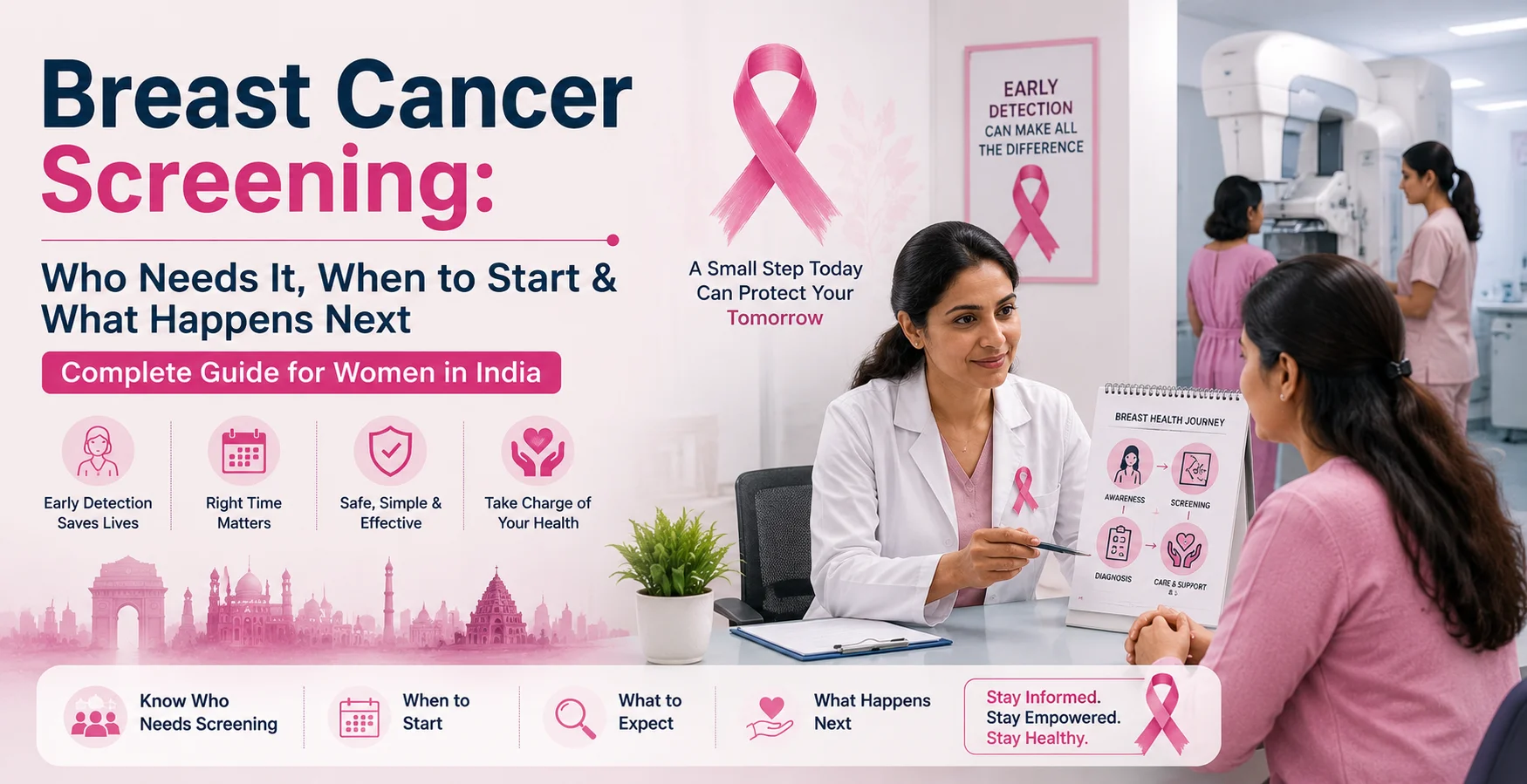
Breast cancer is one of the most common cancers affecting women in India, and what makes it concerning is how often it’s detected late. That’s why Breast Cancer Screening matters more than most people realise.
The idea is simple. Catch it early, deal with it early.
Regular Breast Cancer Screening helps in the early detection of breast cancer, often before you notice any clear signs. Many breast cancer symptoms in women don’t show up in the beginning, which is why relying only on symptoms isn’t enough. A simple breast cancer test or timely mammography screening can actually make a life-saving difference.
The problem is, most women either delay it or don’t know when to start. Breast screening guidelines exist for a reason, but they’re often ignored.
Through this guide, you will also learn who needs Breast Cancer Screening, when to begin screening tests for breast cancer as well as what actually happens during the process.
Table of Contents
What is Breast Cancer Screening?
Breast Cancer Screening is a type of screening which involves checking for cancer before symptoms occur. You’re not waiting for something to go wrong, you’re being proactive about your health.
It includes different types of breast cancer test methods that help detect even the smallest changes early.
That’s the whole goal here, early detection of breast cancer when treatment is simpler, more effective, and less stressful.
Why it matters in real life:
Many breast cancer symptoms in women show up late, when the condition has already progressed
Early detection of breast cancer improves survival rates significantly
Treatment is less aggressive and recovery is easier when caught early
Another important thing to understand is that you can feel completely fine and still have early changes that only screening can detect. That’s why regular checks are so important.
Following proper breast screening guidelines ensures you’re not missing something important just because you “feel fine.” It’s a simple step, but it can make a life-changing difference.
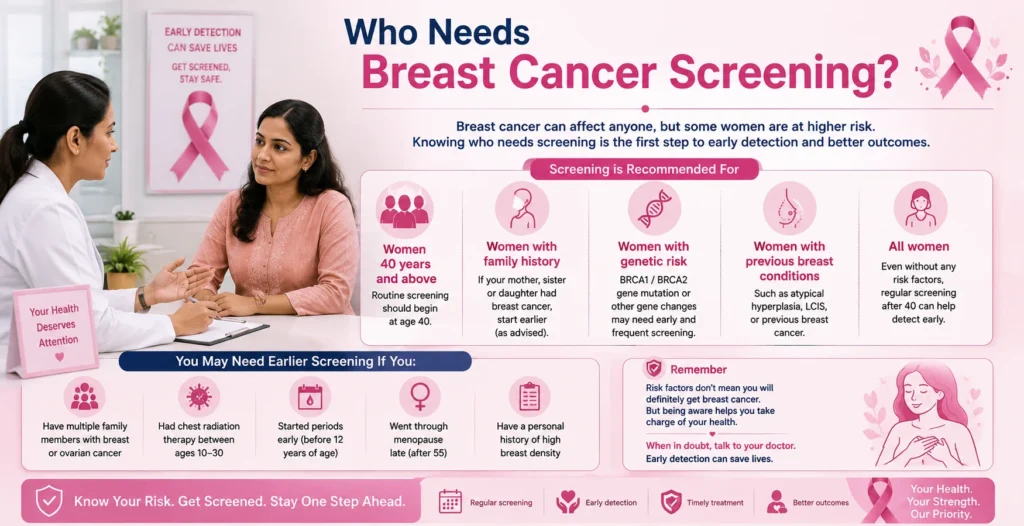
Who Needs Breast Cancer Screening?
This is where most people get confused. They assume screening is only for older women. That’s not entirely true.
Most women benefit from Breast Cancer Screening, but the need becomes more serious based on risk.
You should consider screening if:
You are 40 or above
There is a family history of breast cancer
You’ve had previous breast issues
Lifestyle factors like obesity or smoking are present
Now, for high-risk individuals, breast screening guidelines become stricter.
High-risk factors include:
Genetic mutations like BRCA
Strong family history
Previous radiation exposure
In such cases, screening may start earlier and happen more often.
When Should You Start Breast Cancer Screening?
Timing is everything when it comes to Breast Cancer Screening.
In your 20s
You don’t need heavy screening yet, but awareness is important.
Know basic breast cancer symptoms in women
Do self-checks
Follow basic breast screening guidelines
In your 30s
This is where things get a bit more structured.
Clinical exams start
Occasional breast cancer test if needed
Monitoring changes becomes important
40 years and above
This is where regular Breast Cancer Screening becomes essential.
Mammography screening every 1–2 years
Routine follow-ups
High-risk women
For women who are considered to be in a high-risk group, screening can begin early.
Early mammography screening
Frequent breast cancer testing
Adherence to strict breast screening protocols
The important point here is consistency. A one-time test will not suffice.
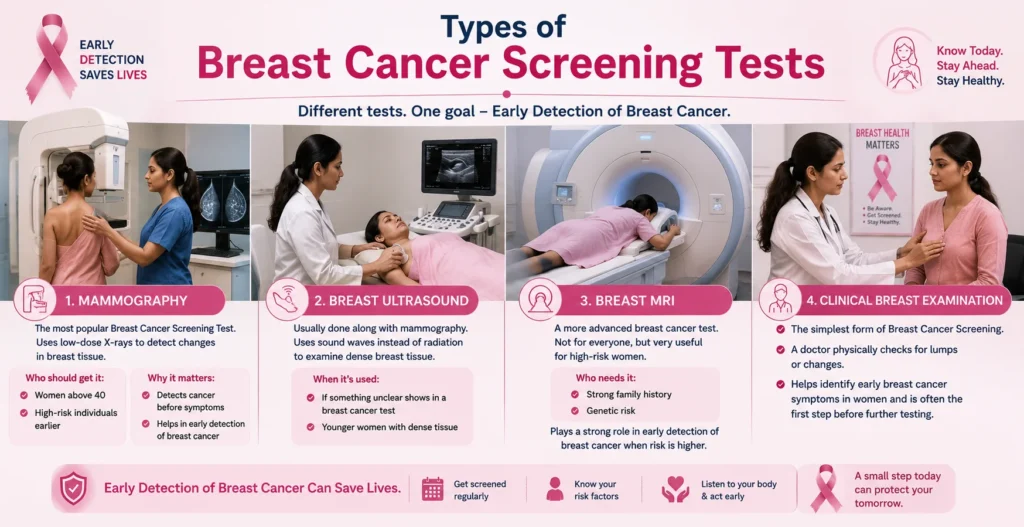
Types of Breast Cancer Screening Tests
Mammography
Mammography screening is the most popular Breast Cancer Screening Test.
Uses low-dose X-rays for detecting changes in breast tissue.
Who should get it:
Women above 40
High-risk individuals earlier
Why it matters:
Detects cancer before symptoms
Helps in early detection of breast cancer
Breast Ultrasound
This is usually done along with mammography screening.
It uses sound waves instead of radiation and helps examine dense breast tissue.
When it’s used:
If something unclear shows in a breast cancer test
Younger women with dense tissue
Breast MRI
This is a more advanced breast cancer test.
It’s not for everyone, but very useful for high-risk women.
Who needs it:
Strong family history
Genetic risk
It plays a strong role in early detection of breast cancer when risk is higher.
Clinical Breast Examination
This is the simplest form of Breast Cancer Screening.
A doctor physically checks for lumps or changes.
It helps identify early breast cancer symptoms in women and is often the first step before further testing.
What Happens During a Breast Cancer Screening?
If you’ve never done Breast Cancer Screening, it’s completely normal to feel a little unsure or nervous. But in reality, the process is quite simple, quick, and handled very professionally.
Here’s what usually happens:
You register and share basic details like age, medical history, and any concerns
A doctor or technician may ask a few questions to understand your risk factors
In some cases, a clinical breast check is done to feel for any lumps or changes
You’re then guided for imaging, most commonly mammography screening
During mammography screening:
Your breast is gently placed between two plates
Light compression is applied to get a clear image
Images are taken within a few seconds from different angles
This part may feel slightly uncomfortable, but it’s very quick and manageable.
Time taken:
Usually around 10 to 30 minutes, including preparation and imaging
Discomfort level:
Mild pressure, but nothing long-lasting
After the test is completed, your scan will be examined by experts. Usually, the results are communicated very quickly, and you’ll receive instructions on what to do next.
What Happens If Something Abnormal is Found?
This is where most people feel anxiety, this is well understood.
An abnormal result in Breast Cancer Screening is NOT synonymous with cancer. As a matter of fact, most discoveries are found to be benign.
When something abnormal is observed doctors may recommend:
A repeat or more detailed breast cancer test
A breast ultrasound to get a clearer view
An MRI in certain cases for detailed imaging
A biopsy, where a small tissue sample is tested
These steps are taken just to be sure and to understand what exactly is going on.
More often than not, the abnormality could be a mere cyst or benign growth. However, it is necessary to check properly because early diagnosis of breast cancer depends on acting in time.
The important point that you should keep in mind is:
The purpose of screening is to detect things early, before they are a big deal. So even if something shows up, you’re actually in a better position because it’s been found early.
Instead of panicking, it’s always better to follow your doctor’s advice and complete the recommended tests calmly.
Benefits of Early Breast Cancer Screening
This is where Breast Cancer Screening actually proves its value. It’s not just a routine check. It’s something that can completely change outcomes.
When you go for regular screening, the biggest advantage is early detection of breast cancer. And early detection is everything.
Here’s what that really means for you:
Treatment starts earlier and is less aggressive
Smaller tumors are easier to manage
Recovery chances are much higher
You avoid complications that come with late diagnosis
Most breast cancer symptoms in women do not show up in the early stage. That’s why depending only on symptoms is risky. Following proper breast screening guidelines and doing timely breast cancer test checks gives you control.
The truth is simple. The earlier you detect it, the easier it is to treat.
Common Myths About Breast Cancer Screening
A lot of women avoid Breast Cancer Screening because of fear or confusion. Most of it comes from myths.
“Screening is painful”
Mammography screening can feel slightly uncomfortable, but it lasts only a few seconds. It’s not something to avoid.
“I feel fine, so I don’t need it”
This is the biggest mistake. Early detection of breast cancer happens before symptoms. Breast cancer symptoms in women often appear later.
“Only older women need screening”
While risk increases with age, younger women with risk factors should also follow breast screening guidelines and consider a breast cancer test.
“Mammography is unsafe”
Mammography screening uses very low radiation and is completely safe when done as recommended.
Understanding these myths helps you take Breast Cancer Screening seriously without unnecessary fear.
Breast Cancer Screening Cost in India
Cost is a common concern, but compared to treatment, Breast Cancer Screening is affordable.
Here’s a rough idea of costs in India:
Mammography screening: ₹1,500 to ₹4,000
Breast ultrasound: ₹1,000 to ₹3,000
Breast MRI: ₹6,000 to ₹15,000
Factors that affect cost:
Type of hospital
City
Technology used
Type of breast cancer test
Most hospitals provide screening packages, and insurance programs are stepping up to cover Breast Cancer Screening, specifically for men and women at high-stakes factors.
Screening is also a very small cost compared to late stage treatment.
When Should You See a Doctor?
Even when you do routine Breast Cancer Screening, you cannot afford to overlook any symptoms in your body.
Following are some symptoms of breast cancer that women must consider:
Lump in the breast or underarm
Persistent breast pain
Nipple discharge
Skin dimpling or changes
Sudden change in breast size or shape
Though these symptoms may not necessarily indicate breast cancer, but can never be overlooked.
In many cases, early detection of breast cancer starts with noticing something small and getting it checked through a breast cancer test.
Don’t wait for things to become serious. If something feels off, consult a doctor.
Conclusion
At the end of the day, Breast Cancer Screening is about being proactive, not reactive.
You don’t wait for symptoms. You stay ahead of them.
Regular screening, along with the adherence to breast screening guidelines, will help you detect the condition earlier. It is important because many cases of breast cancer in women do not show their symptoms until later. This makes breast screening highly significant.
Our approach at Soumya Multispecialty Hospital emphasizes the importance of timely screening and the significance of being aware about the problem. We aim to provide the necessary care for early detection and improved outcomes.
Make it a habit. Make it a priority. A simple breast cancer test today can prevent a much bigger problem tomorrow.
Take Charge of Your Health with Early Screening
Don’t wait for symptoms to appear. Regular breast cancer screening helps detect issues early, when treatment is simpler and more effective. Stay proactive, stay informed, and protect your health with timely checkups.